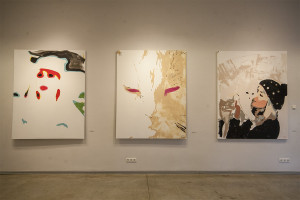
Maarit Murka “kontakt / contact”
13.02. – 09.03. 2014
for English scroll down
Kontakti astuma, kontaktis olema, kontakteeruma. Kontakt kui kokkupuude millegiga, mis on hetkes tundmatu ja kasutatavas süsteemis võõras. Teine valdkond ei saa üle võtta vastase märgisüsteemi ja seda objektiivselt analüüsida. Tuntud või tundmatu printsiibil tekib kokkupuutel alati ainulaadne tõlgendus, mis on ajas muutuv. Kontakti mõistetakse läbi isikule tuttava süsteemi.
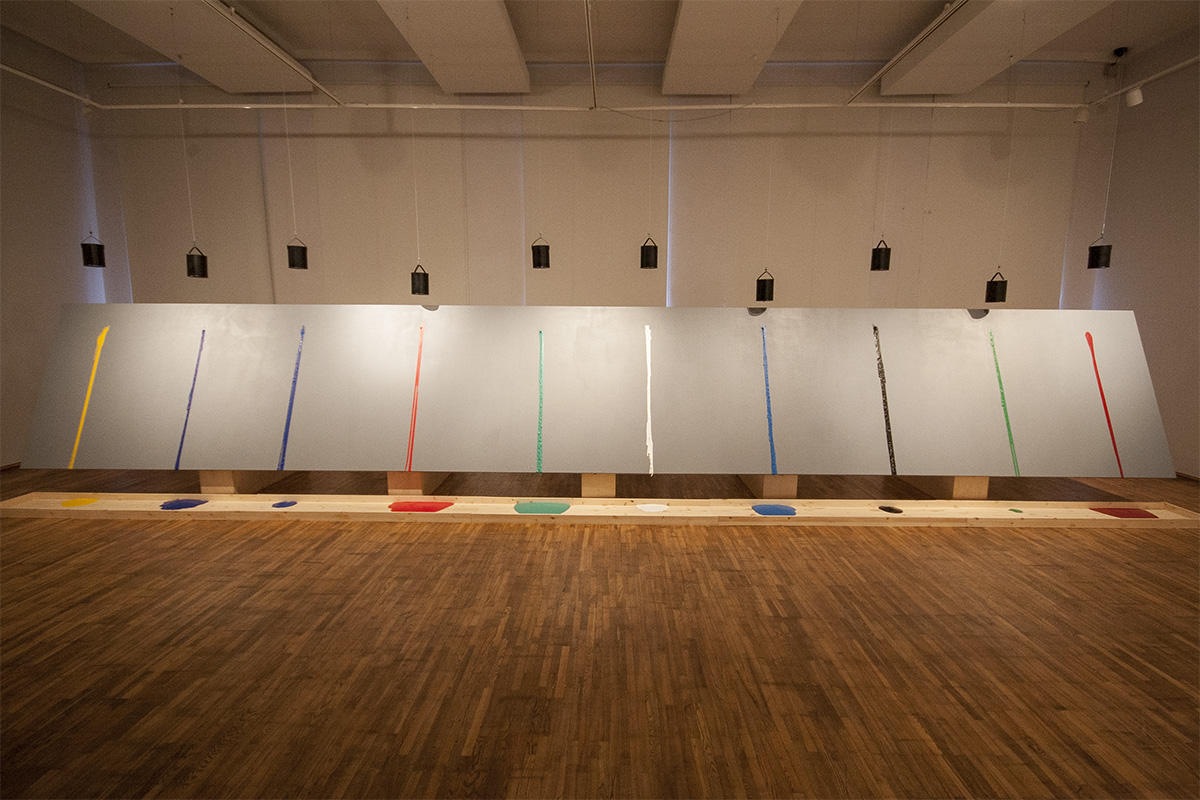
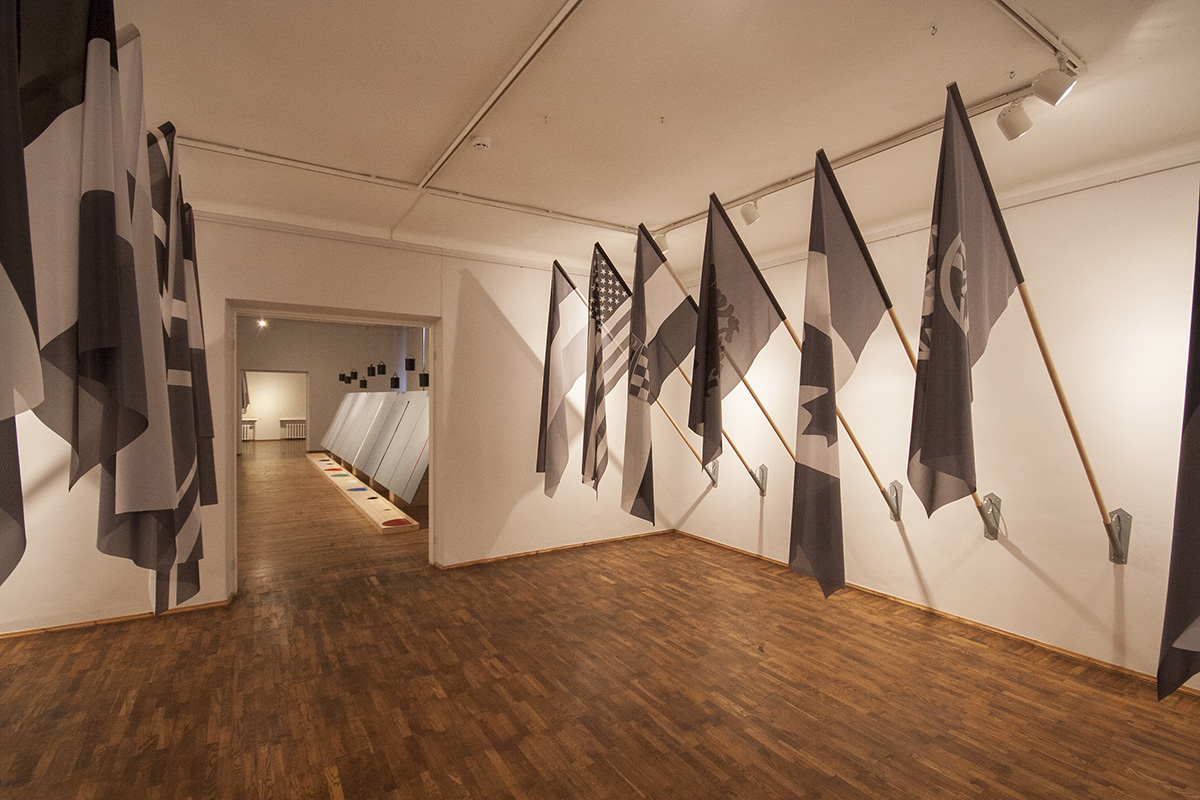
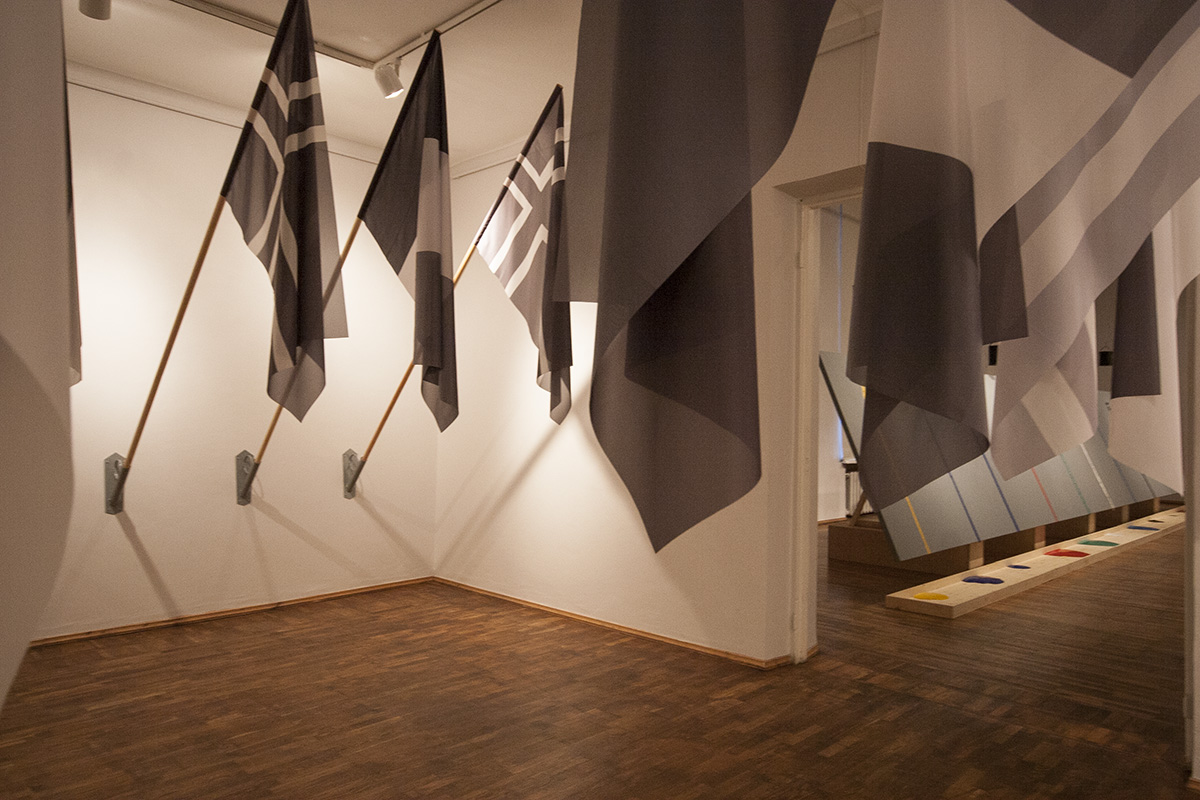
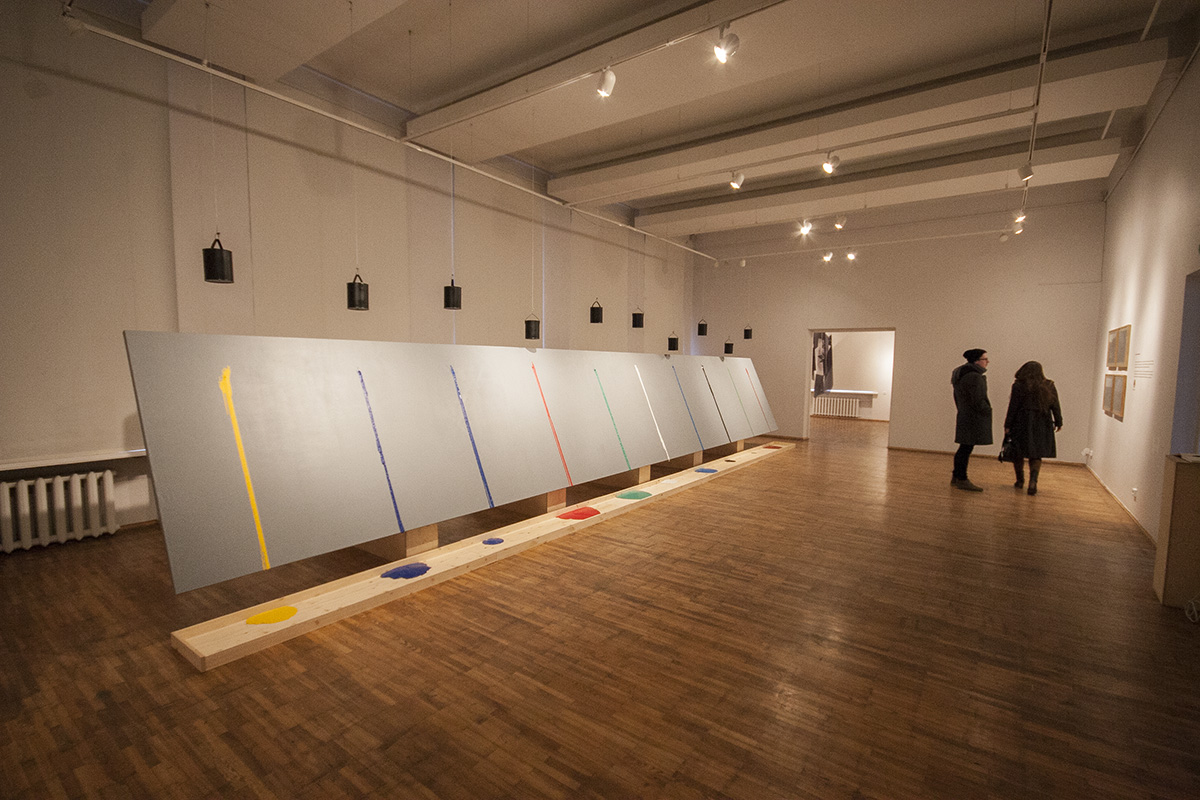
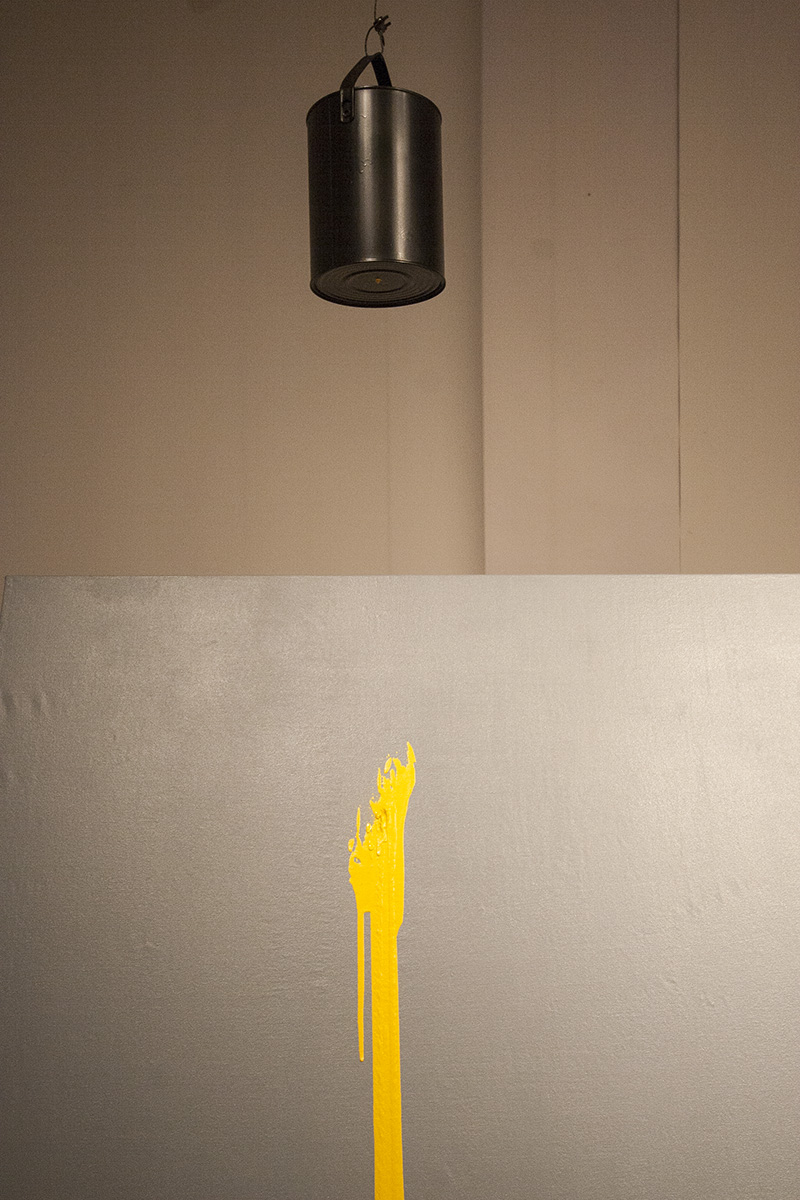
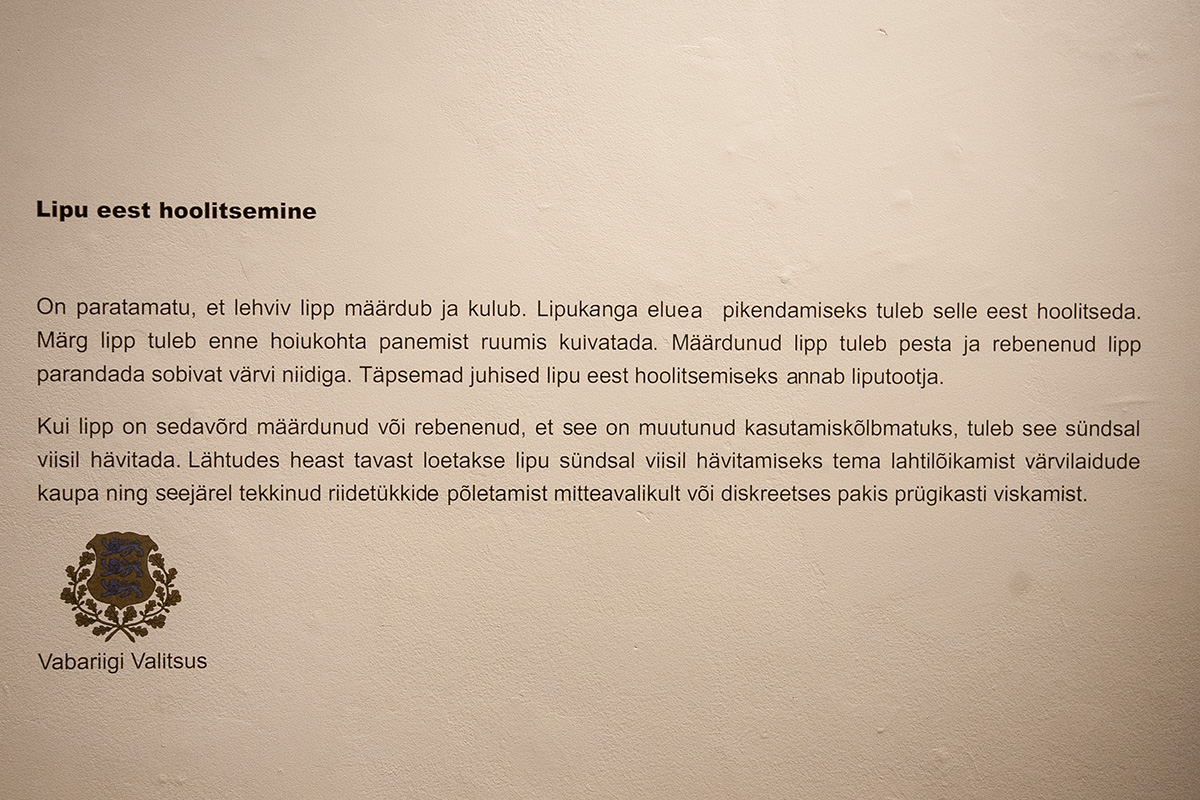
Visuaalse kunstniku keel ja süsteem on semiootiline ning informatsiooni tõlgib ja analüüsib kunstnik läbi kunstikeelele tuttava märgisüsteemi. See ei ole alati poliitiliselt korrektne, vaid uurib teemasid ja kompab piire seal, kus kõik ei ole alati nii must- valge nagu seda näidata tahetakse. Murka, kes on varasemas loomingus taandanud oma märgisüsteemi vaid mustale ja valgele, astub seekord kontakti teemaga, mis näib esmapilgul jäik ja tasapinnaline, kuid milles on arvutult vastuolusid ja emotsioone. Lahingus tähendab kontakt võitlust vastasega, kunstnikul on esimene kontakt teemaga, teine publikuga. Näitus tõlgendab kaasaja poliitilisi kontakte, mis on realiseeritud läbi sõjalise vormi – „Sõda on poliitika jätkamine teiste vahenditega“ (Carl von Clausewitz). Installatsioonid koonduvad ruumides üheks tervikuks ning viitavad must- valgele süsteemile mis meid ümbritseb. Samas on rõõm tõdeda, et kõik värv ei ole maailmast kadunud, kunst peab olema suuteline ka kõige värvitumal ajaloo hetkel toonid esile tooma.
Küsimus ei ole selles, kas sõda ja miks sõda, vaid küsimus on kokkupuutepunktis ja mis sellest õppida. Kui on kontakt, siis on see millegi jaoks vajalik ja ettemääratud, ainuke oluline asi on olla selles hetkes kohal ja väljuda kontaktist uue energiaga.
Maarit Murka
————————————-
Maarit Murka „Contact“
Making contact, keeping contact, to contact. Contact as a connection with something that is unknown in the moment and unfamiliar in the system in use. Another area cannot adopt the opposition’s sign system and analyse it objectively. After the principle of the known or the unknown, contact always creates a unique interpretation, which is mutable in time. Contact is understood through a system familiar to the person.
The visual artist’s language and system is semiotic, and the artist interprets and analyses information through a sign system familiar to the art language. It isn’t always politically correct, but it looks at themes and tests borders where everything is not always black and white like some would want us to believe. Murka, who in her early works has reduced her sign system to black and white, makes contact with a theme that at first glance seems rigid and flat, but which holds innumerable controversies and emotions. In a battle contact means struggle with the enemy; for an artist the first contact is with the subject matter and the second with the audience. The exhibition interprets today’s political contacts, which have been executed through the format of war – “War is the continuation of politics by other means” (Carl von Clausewitz). Installations make up a whole in the rooms, referring to the black-and-white system that surrounds us. At the same time it is a pleasure to note that not all colour is lost in the world; art must be capable of bringing out the colours even at the most dull moments of history.
It is not a question of war and the point of war, it is a question of a meeting point and what it can teach us. If there is a contact, it is necessary for something and predetermined, the only important thing is to be present in the moment and come out of the contact with a new energy.
Maarit Murka
Raimu Hanson “Kunst lööb näkku lippude rippudes” Tartu Postimees 17.02.2014
Indrek Grigor “Maarit Murka konatktid” Sirp 07.03. 2014