
(Scroll down for English)
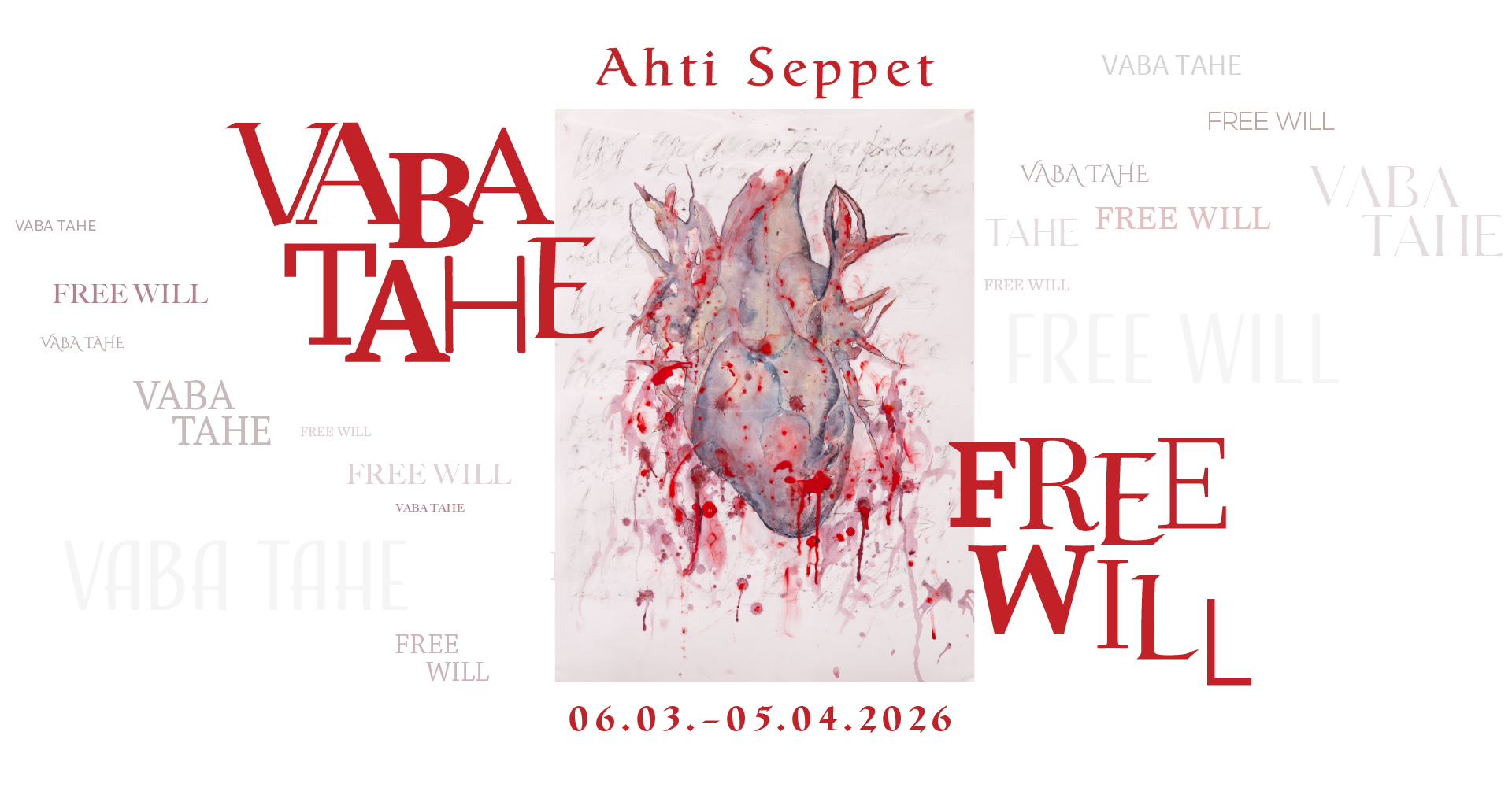
Reedel, 6. märtsil kell 17.00 avatakse Tartu Kunstimaja suures saalis Ahti Seppeti isikunäitus „Vaba tahe“. Näituse kuraator on Indrek Grigor.
Näitus on jagatud kolmeks mõtteliseks tervikuks, mis avavad pingeid kunstniku loomingu eri tahkudes: keha ja mõistus, iha ja vastutus, isiklik ja poliitiline.
Loodusmaalide komplekt „Maa ja taevas” lähtub kunstniku nooruspõlve merekogemustest ning võimaldab mõttelist nostalgitsemist. Taeva ja vee, horisondi ja peegelduse motiivides kohtuvad vahetu kehaline mälu ning filosoofiline üldistus looduse ühtsusest ja vastandlikkusest.
Skulptuuride ja assamblaažide komplekt „Verekutse” on mäng Seppeti loomingule omase poliitilise satiiriga, mis on samavõrd groteskne kui jõhker. „Vere kaudu” edasi kanduv ideoloogiline pärand ulatub sügavale meie näiliselt demokraatliku oleviku võimu- ja allumismehhanismidesse.
Näitus kulmineerub kvaasireligioosse kompositsiooniga „Vaba tahe”, mille keskmes on seksuaalsus, armastus ja keha kui otsustusvõime ning haavatavuse kandja. Aju, südame ja suguelundi metafooriline kooslus kehastab isiklikku vabadust, erootika, eetika ja enesetsensuur aga selle piire.
Graafiline disain: Katrin Nõu
Keeletoimetajad: Eva Lepik ja Richard Adang
Ahti Seppet (s 1953) lõpetas 1973. aastal Tartu Kunstikooli puidu kunstilise kujundamise erialal. Õppis 1978–79 Tartu Ülikoolis juurat ning osales samal ajal Andrus Kasemaa juhitud Kunstikabineti tegevuses. Seppet on töötanud Tartu Lastekunstikoolis ning alates 1984. aastast Tartu Kunstimuuseumis, algselt Anton Starkopfi ateljeemuuseumi juhatajana, hiljem skulptuurikogu hoidjana kuni 2014. aastani. Seppet kuulub Eesti Kujurite Ühendusse ning on Eesti ja Tartu Kunstnike Liidu ning kunstnikegrupi Para liige.
Seppet alustas näitustel osalemist 1970ndate lõpus maalidega, kuid pälvis järgmise kümnendi algul tähelepanu skulptorina. Ta on korraldanud aktiivselt isikunäitusi ja osalenud grupinäitustel nii maalide, skulptuuride, ehete kui joonistustega Eestis, Saksamaal, Soomes ja mujal. Seppet on kureerinud mitmeid skulptuurinäitusi, muu hulgas „Pallase skulptuur“ (Tartu Kunstimuuseum, 2006), „Anton Starkopf. Eesti skulptuurilegend“ (Kumu Kunstimuuseum, 2010). Skulptuurilukku on jäänud ka Seppeti 1987. aastal algatatud pisiplastika näituste sari.
Näitust toetab Eesti Kultuurkapital.
Meediakajastus
Jaan Malin. ARVUSTUS ⟩ Vaba tahe versus vaba tahtetus. Tartu Postimees, 1. aprillil 2026.
Erkki Luuk. ARVUSTUS ⟩ Küll, veel ja liigagi palju. Postimees, 30. märtsil 2026.
Ave Lutter. Tartu Kunstimajas avati Ahti Seppeti isikunäitus “Vaba tahe”. Kultuur.err, 9. märtsil 2026.
Marii Kangur. Tartu Kunstimajas avati Ahti Seppeti isikunäitus. ERR Raadiouudised, 9. märtsil 2026.
Raimu Hanson. Ahti Seppet üllatab maalide, poliitilise satiiri ja seksuaalsusest kantud kompositsiooniga. Tartu Postimees, 6. märtsil 2026.
Aet Rebane. Tartu kunstimaja avab märtsis Ahti Seppeti isikunäituse “Vaba tahe”. Tartu Postimees, 27. veebruaril 2026.
On Friday, 6 March at 5:00 p.m., Ahti Seppet will open his solo exhibition “Free Will” in the large gallery of the Tartu Art House. The curator of the exhibition is Indrek Grigor.
The exhibition is divided into three conceptual sections that reveal tensions across different viewpoints in the artist’s practice: body and mind, desire and responsibility, and the personal and the political.
The series of landscape paintings “Heaven and Earth” draws on the artist’s youthful experiences by the sea and allows for a form of reflective nostalgia. In the motifs of sky and water, horizon and reflection, immediate bodily memory meets a philosophical generalisation of nature’s unity and its oppositions.
The series of sculptures and assemblages “The Call of Blood” plays with the political satire intrinsic in Seppet’s work, as grotesque as it is brutal. An ideological legacy transmitted “through blood” reaches deep into the mechanisms of power and submission within our seemingly democratic present.
The exhibition culminates in the quasi-religious composition “Free Will”, centred on sexuality, love and the body as carriers of both agency and vulnerability. The metaphorical constellation of brain, heart and sex organ embodies personal freedom, while erotics, ethics and self-censorship delineate its limits.
Free Will does not offer answers; it sustains tension: between body and mind, desire and responsibility, personal experience and a generalising gaze.
Graphic design: Katrin Nõu
Language editors: Eva Lepik & Richard Adang
Ahti Seppet (b. 1953) graduated in 1973 from the Tartu Art School, specialising in artistic wood design. In 1978–79 he studied law at the University of Tartu while simultaneously participating in the activities of the Art Cabinet, led by Andrus Kasemaa. Seppet has worked at the Tartu Children’s Art School and, since 1984, at the Tartu Art Museum, initially as the head of the Anton Starkopf Studio Museum and later as a curator of the sculpture collection until 2014. He is a member of the Estonian Sculptors’ Association, as well as the Estonian Artists’ Association, the Tartu Artists’ Association and the artists’ group Para.
Seppet began exhibiting in the late 1970s with paintings, but gained wider recognition as a sculptor in the early 1980s. He has actively organised solo exhibitions and participated in group exhibitions with paintings, sculptures, jewellery and drawings in Estonia, Germany, Finland and elsewhere. Seppet has curated several sculpture exhibitions, including Pallas Sculpture (Tartu Art Museum, 2006) and Anton Starkopf. A Legend of Estonian Sculpture (Kumu Art Museum, 2010). Also notable in the history of sculpture is the series of small-scale sculpture exhibitions initiated by Seppet in 1987.
The exhibition is supported by the Cultural Endowment of Estonia.