
(Scroll down for English)
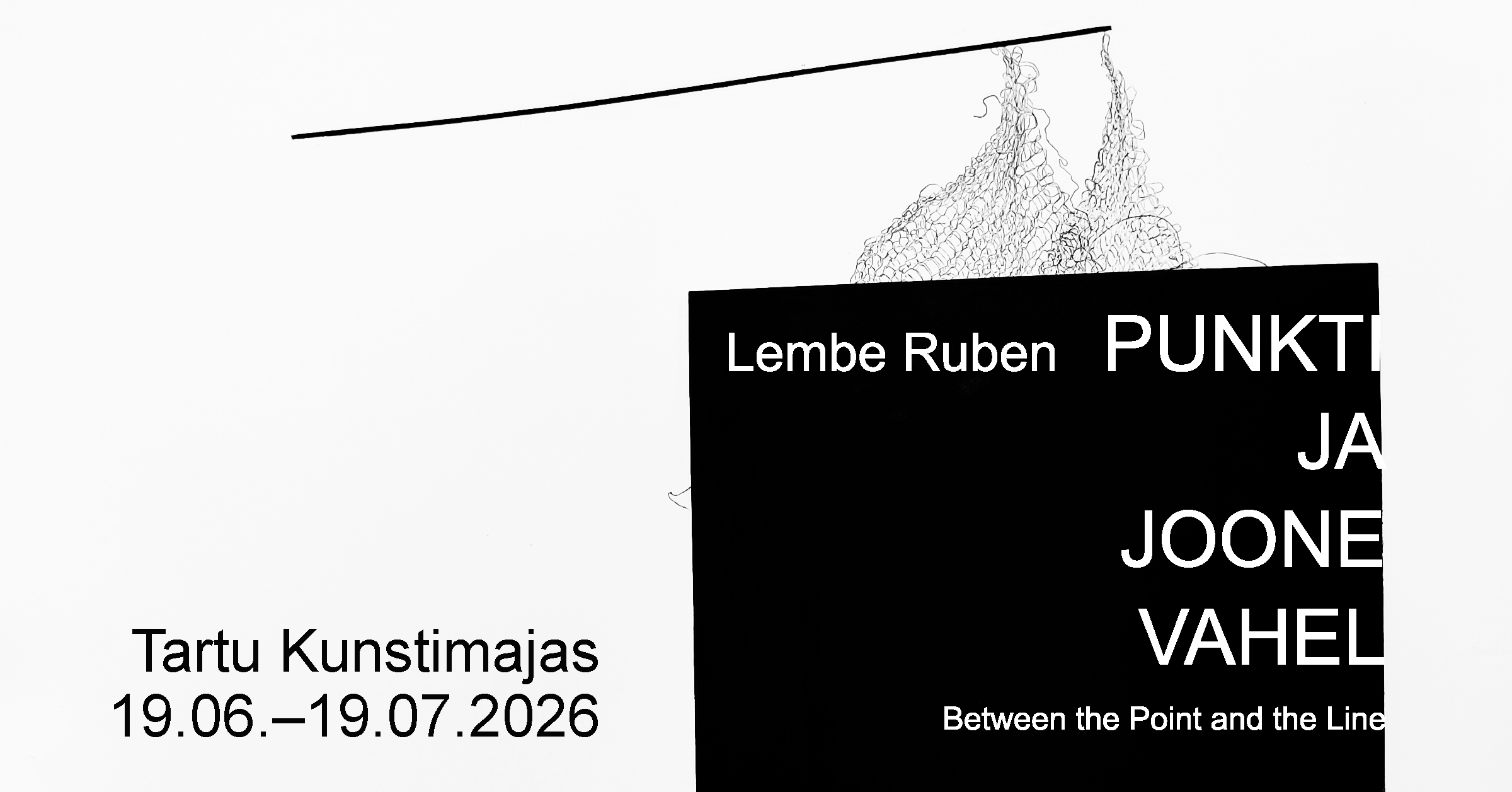
Reedel, 19. juunil kell 17.00 avatakse Tartu Kunstimaja väikeses saalis Lembe Rubeni isikunäitus „Punkti ja joone vahel“.
Kunstnik uurib oma loomingus punkti ja joone, alguse ja lõpu vahelisi seoseid. Alguspunkt on alati lõpp-punkti seeme. Kas igas esimeses impulsis sisaldub kogu võimalik trajektoor? Kust tekib see punkt, mis paneb inimese liikuma – nähtamatu põhjus, mis annab tahtele kuju ja suunale mõtte?
Olemine on objektide ühest punktist teise liigutamine. Et see ei oleks sisutu molekulide liikumine, on meile antud tahe ehk lõpp-punkt, kuhu jõuda tahame.
Selline on ka loomise lihtsustatud valem, millele kogu loodu ja loomingu saab taandada – punkt ja joon ehk olek ja suund. Kõik loodu, nii bioloogiline kui vaimne, sünnib nende kahe suhtepingest.
Siblime justkui suletud ruumis oma areaali raames, igaühel oma eesmärgid. Moodne haigus – depressioon – on tahte puudumine anda molekulidele suund ja lõpp-punkt. Suundi ja ootusi on nii palju. End joone peal hoida on suur balansseerimine.
„Lõpp-punkt on lihtne kaduma, sest ellujäämise soovile lisaks on meie ajastul meeletu hulk ideoloogiaid, millega saab liigutada inimest sinna, kuhu ta oma fantaasias ei ulatuks – konfliktide puhul ka indiviidile endale kahjulikku ja ebavajalikku suunda. Takistused muudavad trajektoore,“ selgitab kunstnik.
Lembe Ruben (s 1974) on lõpetanud Eesti Kunstiakadeemia graafika eriala ja omandanud magistrikraadi vabades kunstides. Ta on täiendanud end Tallinna Ülikoolis psühholoogia ja kunstiteraapia alal. Rubenil on olnud 17 isiknäitust ja erinevaid ühisnäituseid nii meil kui mujal. 2011. aastal pälvis ta Wiiralti noore kunstniku preemia. Lisaks näitusetegevusele on Ruben õpetanud graafikat, joonistamist ja kompositsiooni Eesti Kunstiakadeemias, TÜ Viljandi Kultuuriakadeemias ja mujal.
Meediakajastus
Kaire Nurk. INTERVJUU ⟩ Lembe Ruben: inimeseks olemist ei õpetata kusagil. Tartu Postimees, 30. juunil 2026.
Jens Raavik. PILDID ⟩ Kunstimaja avas korraga kolm uut näitust. Tartu Postimees, 20. juunil 2026.
On Friday, 19 June at 5:00 p.m., Lembe Ruben will open her solo exhibition “Between the Point and the Line” in the small gallery of the Tartu Art House.
In her work, the artist explores the connections between the point and the line, and between the beginning and the end. The starting point is always the seed of the end point. Does every first impulse already contain the entire possible trajectory? Where does the point arise that sets a person in motion, the invisible cause that gives shape to will and meaning to direction?
Being is the movement of objects from one point to another. So that this does not remain a meaningless motion of molecules, we have been given free will: an end point we wish to reach.
This is also a simplified formula of creation, to which all that exists and all creative work can be reduced: the point and the line, or state and direction. Everything created, both biological and spiritual, is born from the tension between these two.
We bustle about as if within a closed space, each of us moving within the boundaries of our own territory, each with our own aims. The modern illness — depression — is the absence of the will power to give molecules direction and an end point. There are so many directions and expectations. To remain on the line requires constant balance.
“The end point is easily lost, because alongside the instinct for survival, our era is filled with countless ideologies capable of moving people toward places their imaginations could never reach: in times of conflict, even toward directions harmful and unnecessary to the individual. Obstacles alter trajectories,” the artist explains.
Lembe Ruben (b. 1974) graduated from the Estonian Academy of Arts with a degree in graphic arts and holds a master’s degree in fine arts. She has furthered her studies in psychology and art therapy at Tallinn University. Ruben has had 17 solo exhibitions and has participated in various group exhibitions both in Estonia and abroad. In 2011, she received the Wiiralt Young Artist Award. In addition to her exhibition activities, Ruben has taught graphic design, drawing and composition at the Estonian Academy of Arts, the University of Tartu Viljandi Culture Academy and elsewhere.